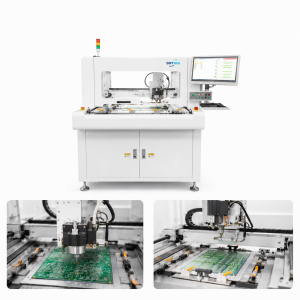
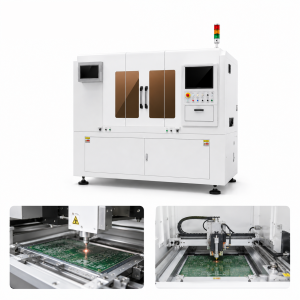


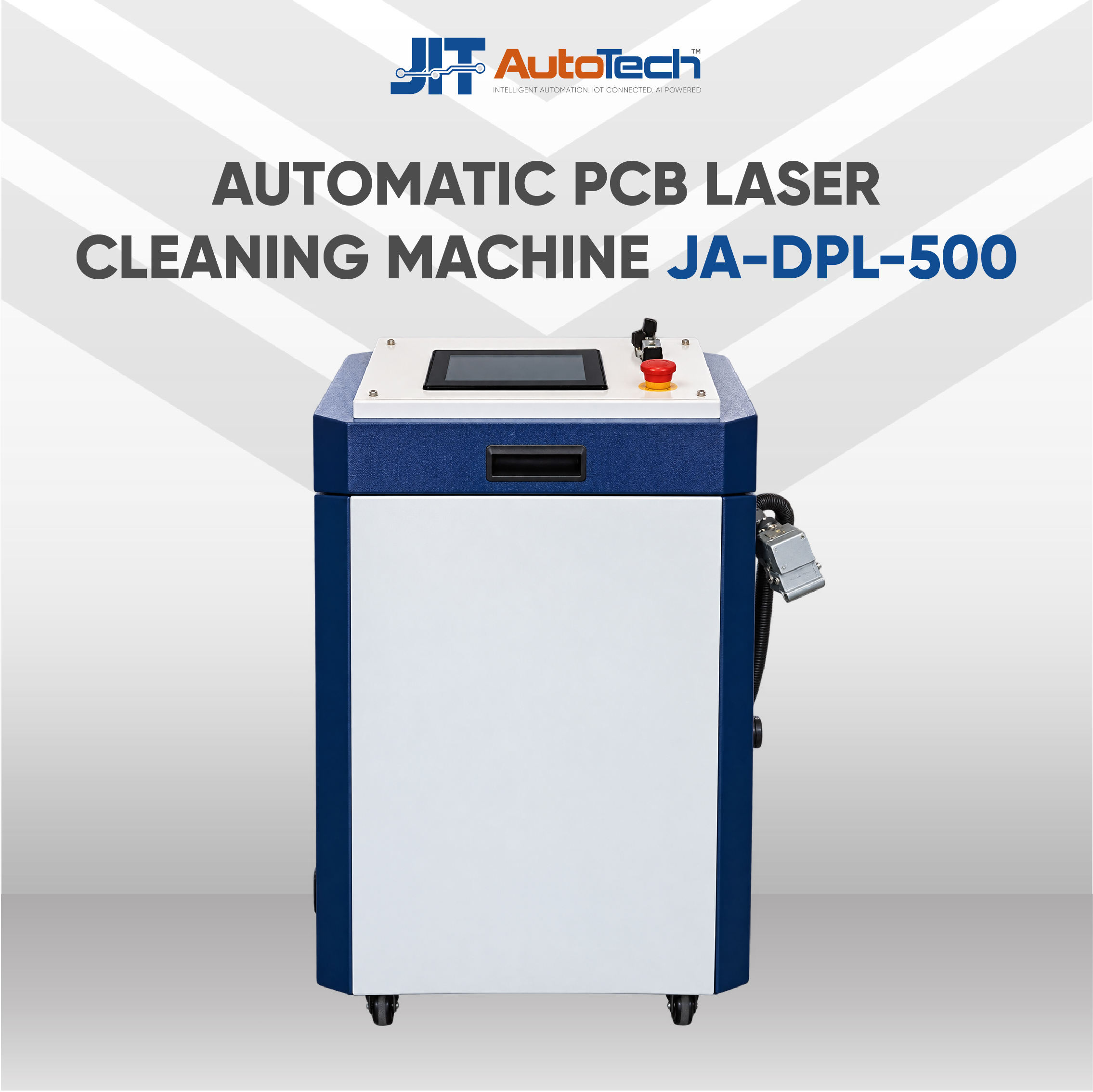
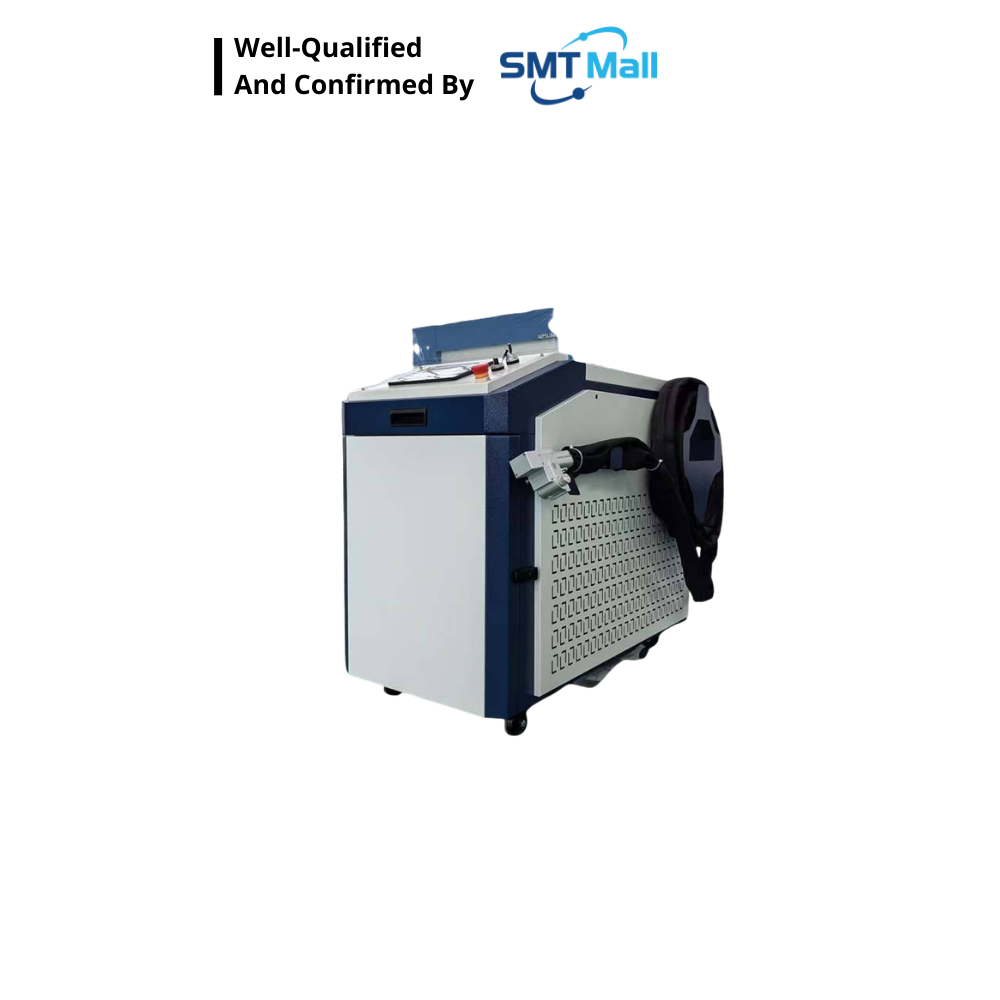
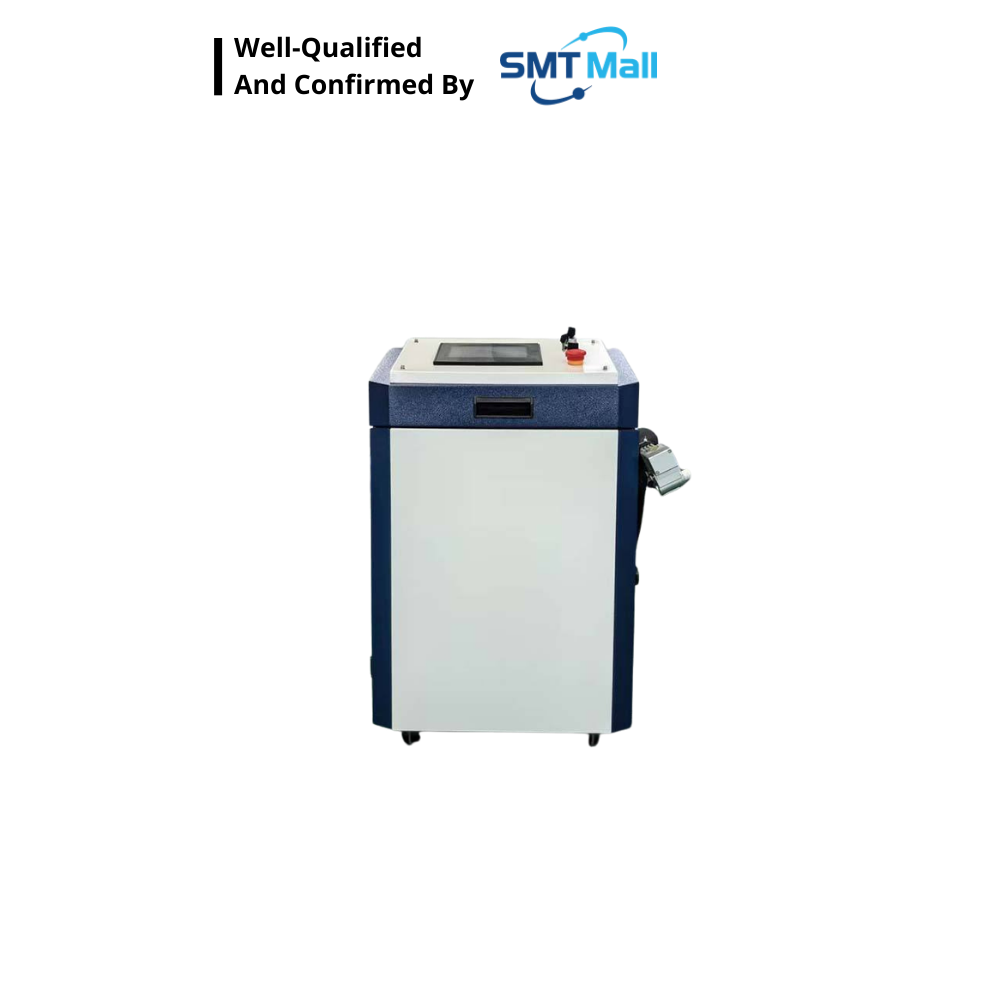
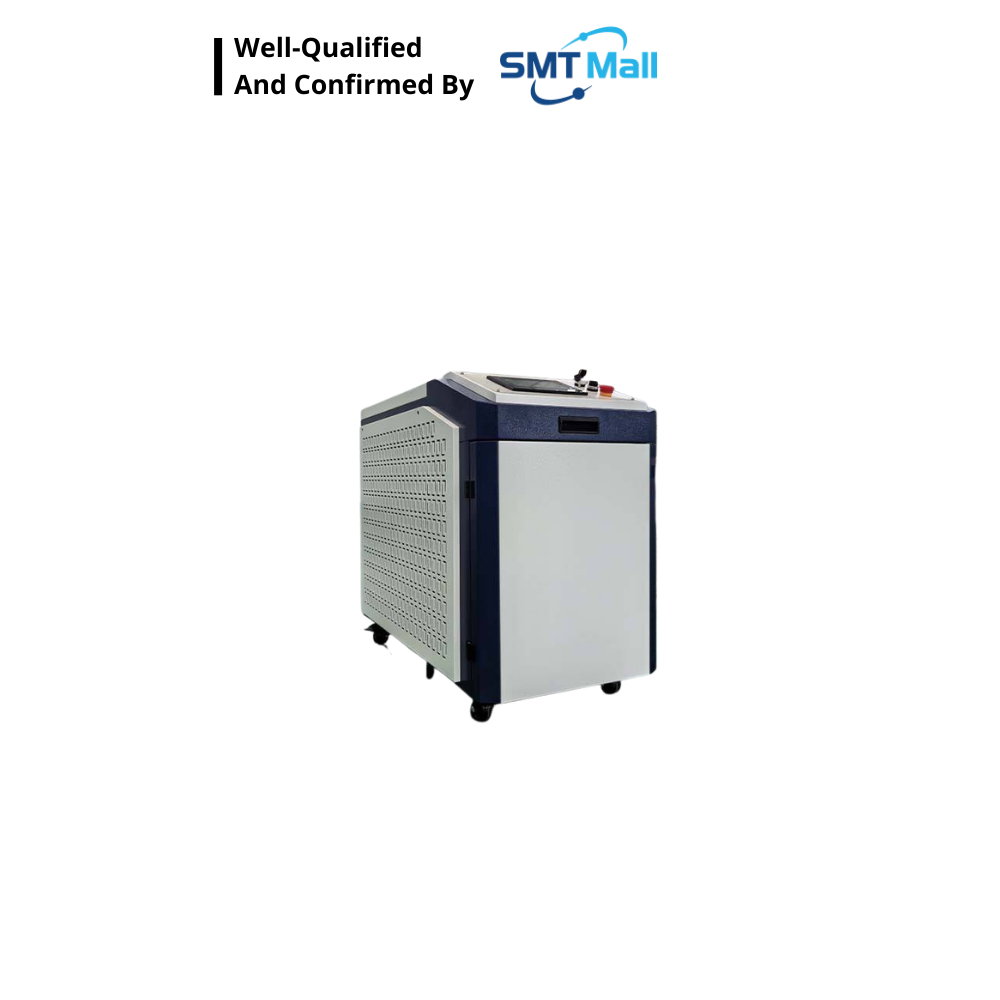
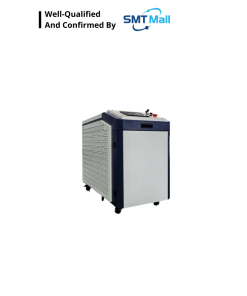
Automatic PCB Laser Cleaning Machine JA-DPL-500
- Brand: JIT AutoTech
$4,200.00
Language
Prices in USD — currency follows the "Ship to" country.
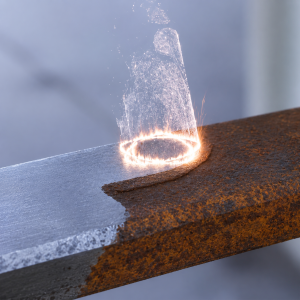
The JA-DPL-500 is a 100 W pulsed fiber laser cleaning machine that removes rust, paint, oil and oxide layers without contact, abrasives or chemicals — and without damaging the base material. Handheld operation or robot-arm automation, 10–150 mm scan width. Part of our Laser Cleaning Machine range in Cleaning Solutions.
Product overview
The DPL-500 Laser Cleaning Machine is a next-generation surface treatment solution designed for precision, eco-friendly, and non-contact cleaning across multiple industries.
Using advanced fiber laser technology, the system removes rust, paint, oil, oxides, and other surface contaminants efficiently — without damaging the base material or using chemicals.
Its portable handheld design with an intuitive bilingual interface (Chinese/English) ensures easy operation, high flexibility, and consistent results in both manual and automated setups.
Technical specifications
| Item | Description |
|---|---|
| Power Supply | Single-phase 220V ±10%, 50/60Hz AC |
| Machine Power Consumption | 3000W (including chiller) |
| Average Laser Power | ≥100W |
| Power Adjustment Range | 10–100% (gradient adjustable) |
| Laser Pulse Frequency | 5–400 kHz adjustable |
| Center Wavelength | 1064 nm |
| Single Pulse Energy | 1.5–15 mJ |
| Focal Length | 254 mm / 160 mm (replaceable) |
| Cooling Method | Water cooling |
| Machine Dimensions | 729 × 592 × 814 mm |
| Weight | 100 kg |
| Fiber Length | 10 m (customizable) |
| Cleaning Head Weight | 1.5 kg |
| Scan Width | 10–150 mm |
| Operation Mode | Handheld / Automatic (robot arm optional) |
Laser cleaning technology uses laser ablation to controllably vaporize unwanted materials from a surface.
Understanding the Technology:
- In a laser cleaning system, infrared light is generated in an optical fiber
- The laser beam travels to the scanhead through the fiber cable
- Inside the scanhead, single or dual beam technology forms the laser pattern
- The laser beam vaporizes contaminants and coatings on the workpiece
Applications
Laser cleaning technology transforms surface preparation across numerous industries. It helps preserve vintage vehicles, maintain critical infrastructural elements, restore historical artifacts, recommission military equipment, and stop corrosive deterioration on boats.
- Automotive industry: Laser cleaning of cylinder heads, tire molds, and engine parts
- Metal fabrication: Rust and paint removal from pipes, steel plates, and welding joints
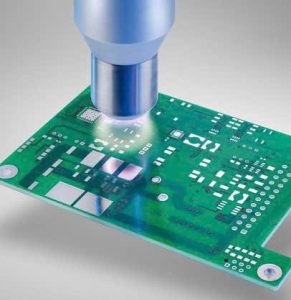
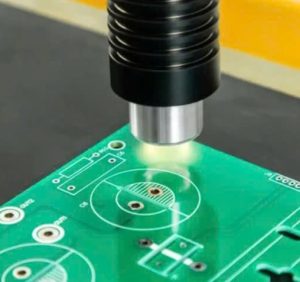
- Aerospace and electronics: Precision component cleaning and oxide removal
- Tooling and molds: Tire, injection, and die-cast mold maintenance
- Cultural heritage restoration: Gentle removal of oxidation and dirt from historical artifacts
Laser cleaning provides faster, safer, and greener alternatives to traditional methods such as sandblasting or chemical cleaning, ensuring improved surface integrity and reduced operational downtime.
Laser cleaning vs. sandblasting and chemical cleaning
| Laser cleaning | Sandblasting | Chemical cleaning | |
|---|---|---|---|
| Consumables | None (electricity only) | Blasting media | Solvents, acids |
| Damage to base material | No — energy is tuned to the coating | Surface wear | Risk of corrosion |
| Waste | Only removed material (fume extraction recommended) | Used media + dust | Chemical waste |
| Selective / local cleaning | Yes, precise | Difficult | Difficult |
Choosing the right settings
Power (10–100%), pulse frequency (5–400 kHz) and scan width (10–150 mm) are adjusted to the coating: lower energy for thin oxide films on electronic parts, higher energy for paint and heavy rust. Two focal lengths (160 mm / 254 mm) are available. Our engineers can test your parts and supply a ready-to-use parameter set.
Related cleaning solutions
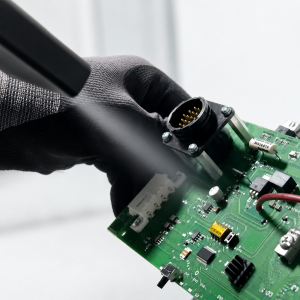
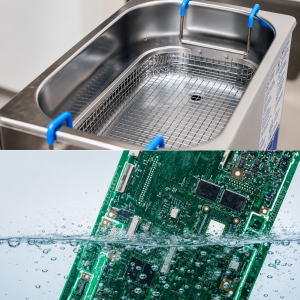
For non-metal parts and delicate PCBs, see our dry ice cleaning machines and the liquid CO2 washing machine. To activate surfaces before bonding or coating, see plasma surface treatment. Request a quote for the JA-DPL-500.
Datasheets & Documents
Video
Frequently asked questions
What can a laser cleaning machine remove?
Rust, paint, oil, grease, oxide layers and other surface coatings from metal parts, molds, welding seams and precision components.
Does laser cleaning damage the base material?
No, when set correctly. The laser energy is tuned so that the contamination absorbs it and vaporises, while the base metal reflects most of it and stays intact.
What are the power and utility requirements?
Single-phase 220 V ±10%, 50/60 Hz. Total consumption is about 3,000 W including the water chiller. Average laser power is ≥ 100 W at 1064 nm.
Can it be automated?
Yes. The 1.5 kg cleaning head can be used by hand or mounted on a robot arm; the fiber is 10 m long and can be customised.
Is laser cleaning safe?
Operators must wear laser safety glasses for 1064 nm and use fume extraction, as the removed material is vaporised. We provide training at installation.