


Reflow Oven
6 products
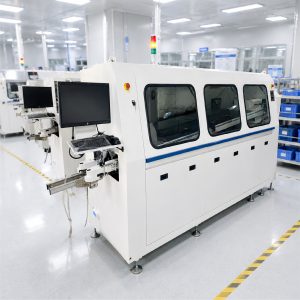
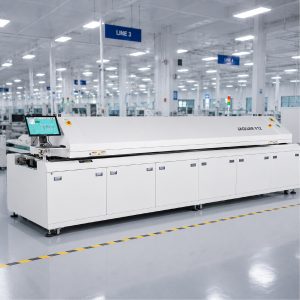
A reflow oven melts the solder paste printed on a PCB so that surface-mount components form reliable joints. The board passes through heating zones that follow a temperature profile – preheat, soak, reflow peak and controlled cooling – matched to the paste and the thermal mass of the board.
Reflow ovens in this category
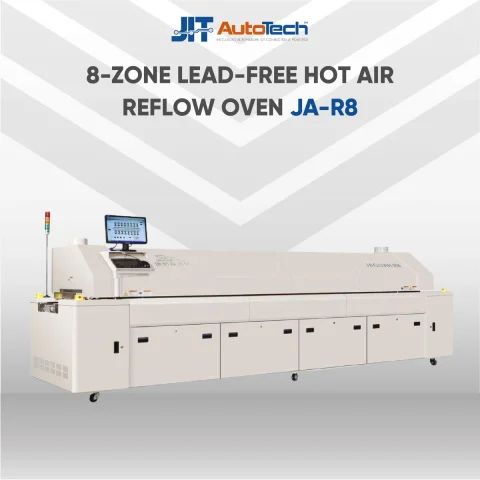
8-Zone Lead-Free Hot Air Reflow Oven JA-R8 – for small and medium production lines.
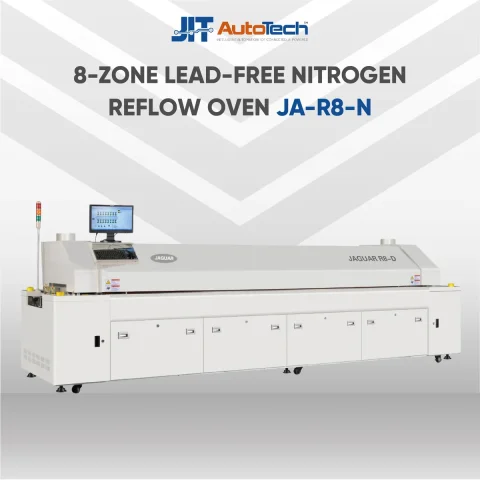
8-Zone Lead-Free Nitrogen Reflow Oven JA-R8-N – nitrogen atmosphere for better wetting and less oxidation on fine-pitch and sensitive assemblies.
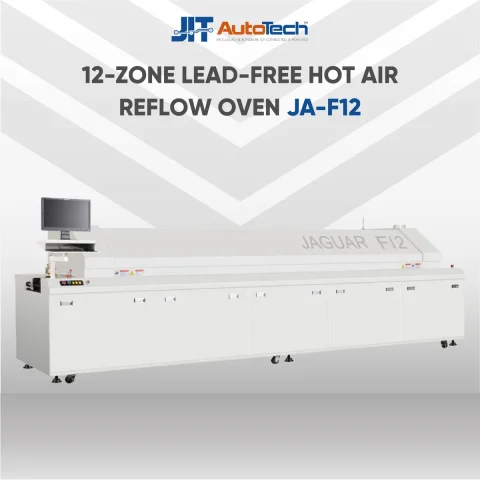
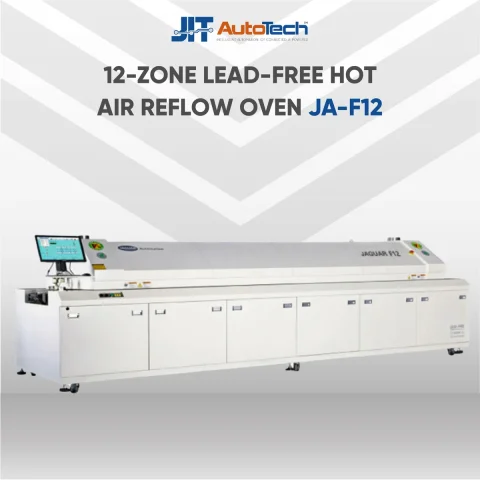
12-Zone Lead-Free Hot Air Reflow Oven JA-F12 – more zones for higher line speeds and heavier, more complex boards.
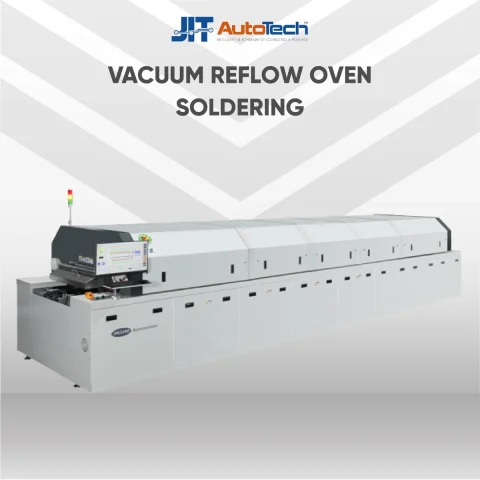
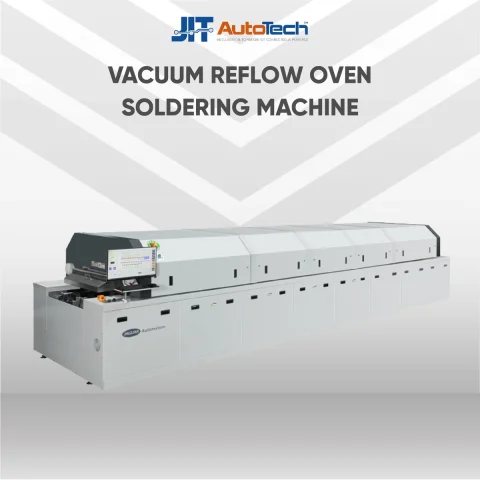
Vacuum reflow oven – applies vacuum while the solder is molten to pull out trapped gas, reducing voids under power devices, QFN, BGA and LED packages.
How to choose a reflow oven
Number of zones: more zones give more control and allow faster conveyor speeds.
Atmosphere: air is enough for most products; nitrogen helps with fine pitch and difficult finishes.
Voiding requirements: choose vacuum reflow for power electronics, automotive and other parts with strict void limits.
Board size and line layout: check conveyor width, maximum board size and footprint.
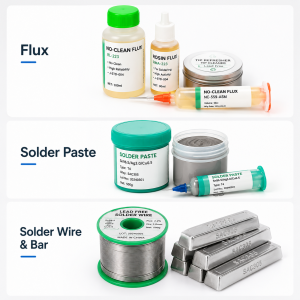
Related: solder paste and wave soldering machines. Send a quote request with your board size and output target for a recommendation.
Reflow oven FAQ
How many heating zones do I need?
More zones give finer control of the temperature profile and allow faster conveyor speeds. Eight zones suit most small and medium SMT lines, while ten to twelve zones are used for higher output and heavier or more complex boards.
When should I use nitrogen reflow?
Nitrogen lowers oxygen in the oven, which reduces oxidation and improves wetting. It helps with fine-pitch parts, small passives, OSP finishes and no-clean processes where the cosmetic quality of joints matters. Most standard boards reflow well in air.
What is vacuum reflow used for?
Vacuum reflow applies vacuum while the solder is molten to pull trapped gas out of the joints. It greatly reduces voids under power devices, QFN and BGA packages and LEDs, and is used in automotive, power electronics and other high-reliability products.
What is a typical lead-free reflow profile?
A typical SAC305 profile has a preheat ramp, a soak around 150 to 200 °C, a peak of roughly 235 to 250 °C with 60 to 90 seconds above liquidus, and controlled cooling. Always follow the profile recommended on your solder paste datasheet.